 how-to
Seawall Maintenance Tips: A How-To Guide
Table of Contents
- Why Seawall Maintenance Matters
- Seawall Inspection Checklist: What to Look For
- Signs of Seawall Failure You Cannot Ignore
- Seasonal Seawall Maintenance Schedule
- Routine Maintenance Tasks You Can Do Yourself
- Seawall Repair vs Replacement: When to Call a Marine Contractor
- Post-Storm Inspection and Documentation
- Frequently Asked Questions
Last Updated: October 15, 2026
Why Seawall Maintenance Matters
Seawall maintenance is not optional for coastal property owners. A failing seawall doesn't just look bad, it threatens your foundation, erodes your land, and can cost tens of thousands to repair once structural damage sets in. The difference between catching a small problem now and dealing with a catastrophic failure later often comes down to one thing: whether you're actually looking.
Florida's coastal environment accelerates seawall deterioration. Salt water, constant moisture, freeze-thaw cycles, and storm surge all work against concrete, steel, and wood simultaneously. What might take a decade in a temperate climate can happen in three to five years here.
The real cost of neglect isn't just financial. A compromised seawall puts your entire property at risk during hurricane season. Soil loss behind the wall can destabilize structures you've built decades later. Water infiltration creates hidden voids that spread silently until the wall suddenly fails.
This guide covers what you need to know to protect your investment through regular inspection, seasonal maintenance, and knowing when professional marine construction expertise is required.
Seawall Inspection Checklist: What to Look For
Regular seawall inspection is the foundation of effective maintenance. You don't need to be an engineer to spot warning signs, you just need to know what to look for.
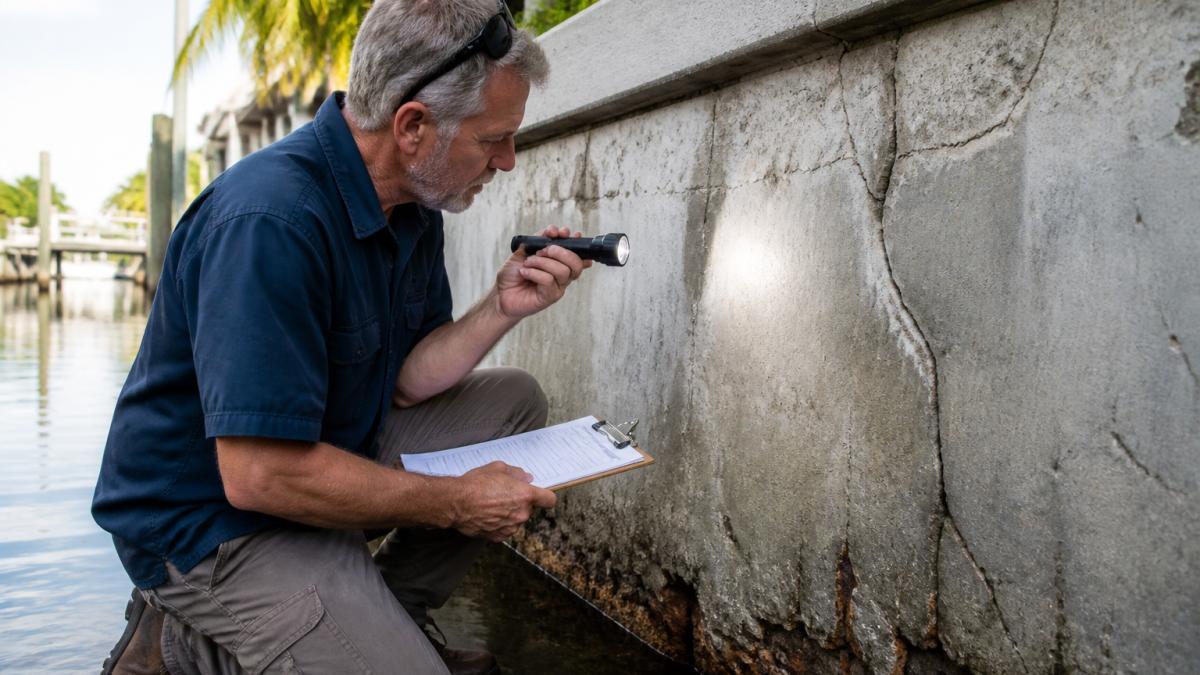
Visual Inspection Steps
Start with what you can see from above and at ground level.
Walk the entire length of your seawall at least twice a year, once in spring and again in fall. Look at the cap first. The cap is the top edge of the wall, and it takes the most direct weather exposure. Check for:
- Cracks running horizontally or vertically
- Spalling (concrete breaking away in chunks)
- Separation from the wall below
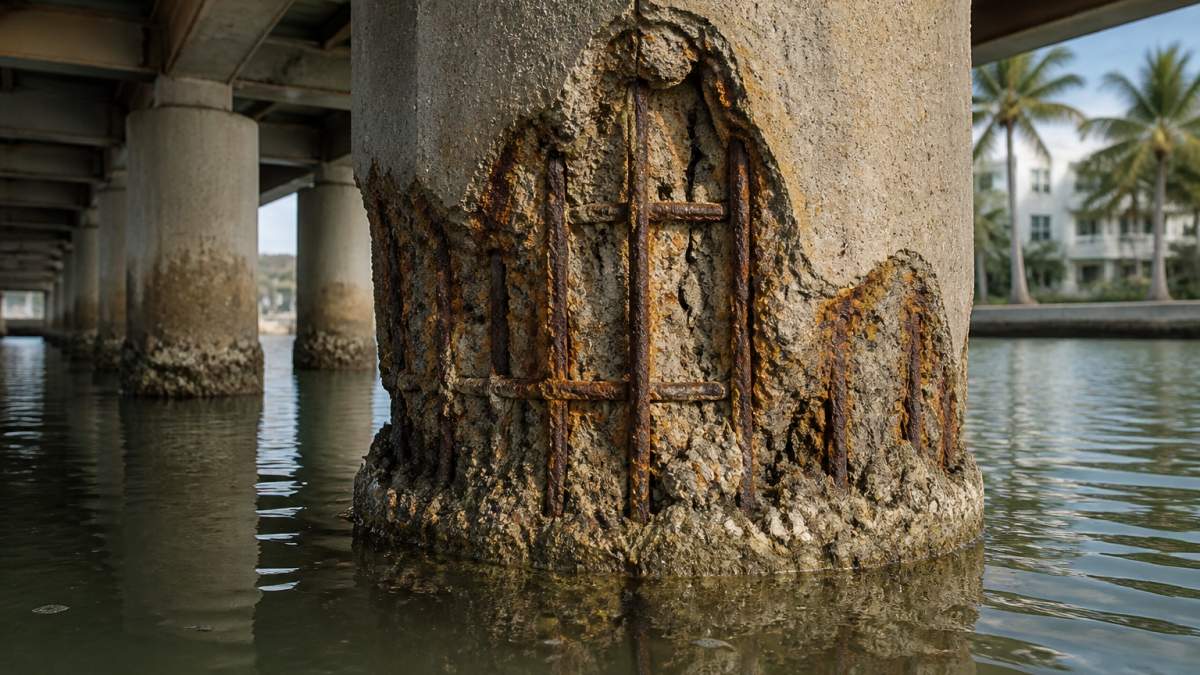
- Rust stains bleeding down from rebar
Next, examine the face of the wall itself. Move slowly along the entire surface. Concrete seawalls commonly develop cracks that start small and grow. A hairline crack today can become a structural problem in two years if water gets inside and freezes.
Document what you find. Take photos with dates. Note the location, size, and direction of any cracks. This record becomes invaluable if you need to hire a contractor later, it shows whether damage is new or stable.
Check the base where the wall meets the ground. This is where soil loss often begins. If you see a gap forming between the wall and the soil, or if the ground behind the wall is visibly lower than it was before, water is moving soil away. That's a drainage problem that needs attention.
Structural Assessment Points
Beyond surface inspection, look for signs of deeper structural issues.
Wall movement is the most serious warning sign. Stand back and look at the wall profile. Does it lean away from the water? Is the top displaced relative to the bottom? This requires professional assessment immediately.
Voids and sinkholes behind the wall indicate soil loss. If you notice the ground settling or small depressions appearing behind the wall, hydrostatic pressure is doing its job, but your drainage system isn't.
Corrosion on steel components, if your seawall has steel tiebacks, anchors, or reinforcement, look for rust, pitting, or orange discoloration. Steel exposed to salt water corrodes fast.
Water seepage or weeping from the wall face means water is moving through the structure. Small amounts are normal, but active water flow indicates pressure buildup behind the wall and poor drainage.
Marine growth, algae, barnacles, and seaweed don't damage the wall directly, but they trap moisture and hide damage underneath. Clearing marine growth regularly lets you see the actual condition of the wall surface.
Signs of Seawall Failure You Cannot Ignore
Some warning signs demand immediate professional attention. Waiting on these is not an option.
Active leaking or water fountaining from the wall means hydrostatic pressure is overwhelming your drainage. This will accelerate soil loss and wall failure. Call a marine contractor immediately.
Large horizontal cracks that span a significant portion of the wall indicate structural stress. The wall is being pushed and may be close to failure.
Visible tilting or bulging of the wall means internal forces have already caused permanent deformation. The wall is failing. This requires emergency repair or replacement.
Rapid soil loss, if the ground behind your wall is dropping noticeably month to month, not year to year, the situation is critical.
Debris or rubble at the base suggests concrete is breaking apart, either from freeze-thaw cycles or from pressure forces. This is active deterioration.
New cracks appearing in buildings or structures near the wall indicate the seawall is moving or settling unevenly, transferring stress to what's built above.
When you see any of these signs, document them with photos and dates, then contact a professional.
Seasonal Seawall Maintenance Schedule
Coastal property maintenance follows the rhythm of the seasons. Different times of year bring different stresses and different maintenance needs.
Spring and Summer Tasks
Spring is inspection season. After winter weather, check for new cracks, spalling, or movement. Clear any debris that accumulated over winter. Look for areas where water is seeping or weeping from the wall.
This is also the time to address drainage issues. If you noticed poor drainage in winter, spring is when you can see whether water is backing up during normal rainfall. Clear any blocked drainage pipes or relief systems. Make sure water can flow away from the wall, not toward it.
Summer brings intense sun and heat. Concrete expands. This is when existing cracks can widen. Inspect monthly during summer if you live on the property. Watch for any new cracking or separation.
Summer is also the season for clearing marine growth. Algae, barnacles, and seaweed thrive in warm water. Remove them to expose the wall surface and prevent moisture trapping. A pressure washer works, but use low pressure, high pressure can damage concrete or push water into cracks.
Ready to move from scope to build? →
Fall and Winter Preparation
Fall is preparation season. Hurricane season peaks in September and October. Before the storm season, ensure your seawall is in the best condition possible. This is not the time for major repairs, it's too late for that, but it is the time to clear debris, verify drainage is working, and document the wall's current condition.
Check that any tiebacks or anchors are secure. Verify that cap connections are tight. Make sure nothing loose can become a projectile in high winds.
Winter brings freeze-thaw cycles that accelerate damage in cold climates, but even in Florida, winter moisture and temperature swings stress concrete. Winter is when hairline cracks can expand as water freezes inside them. Inspect after cold snaps. Look for new cracking or spalling.
Winter is also when soil loss becomes visible. With less vegetation growth and more rain, erosion behind the wall accelerates. If you see new voids or settling, address drainage before spring rains make it worse.
Routine Maintenance Tasks You Can Do Yourself
Not every seawall maintenance task requires a contractor. Some routine work protects your wall and keeps small problems from becoming big ones.
Clearing Debris and Marine Growth
Remove leaves, branches, and debris from the top of the wall and around the base. Debris traps moisture and can hide damage. It also blocks drainage.
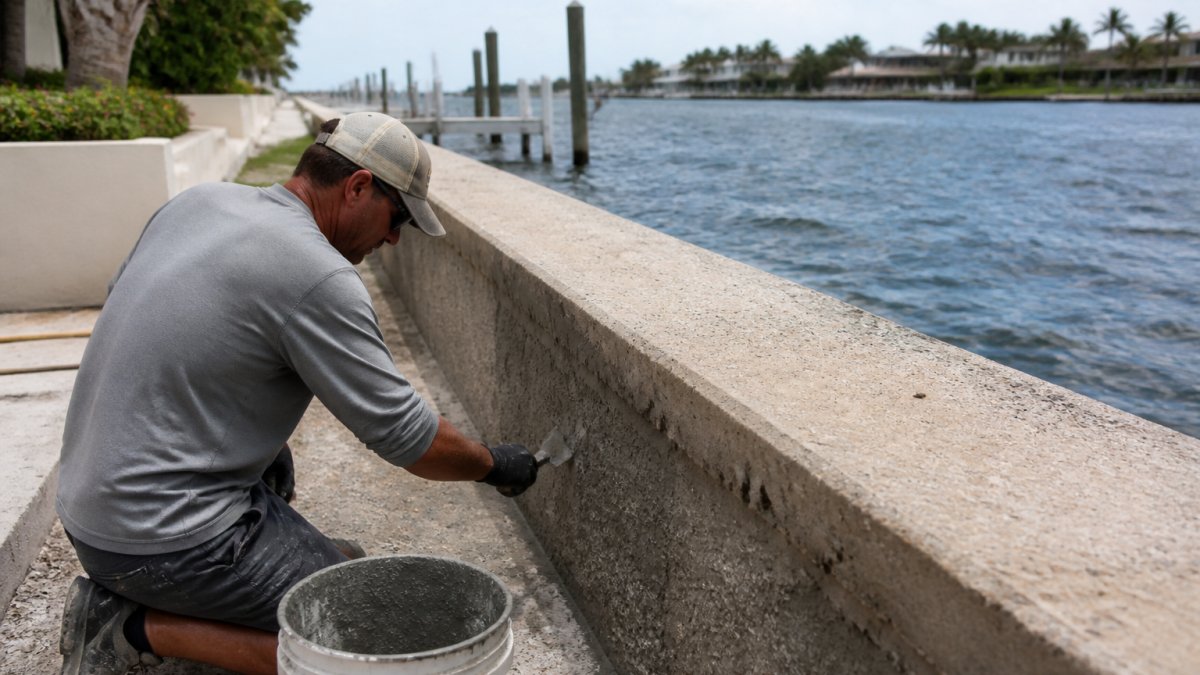
Clear marine growth regularly. Use a stiff brush or pressure washer at low pressure. Do not use high-pressure washing, it can drive water into cracks and damage concrete.
Keep vegetation trimmed back from the wall. Roots can penetrate concrete and create pathways for water infiltration. Trees and shrubs also shade the wall, which can trap moisture.
Monitoring Drainage and Pressure Relief
Check drainage pipes or weep holes regularly. These are small openings designed to let water behind the wall drain out. If they're blocked, water backs up and pressure builds. Clear them of debris.
Watch for water seeping from the wall after heavy rain. Some seepage is normal, it means drainage is working. But if water is actively flowing or fountaining, pressure is too high.
Monitor the ground behind the wall. If it's settling or becoming soft, water is moving soil. This is a sign that drainage is failing and you need professional help.
If you have a sump pump or drainage system, verify it's working. Test it manually if possible. Make sure discharge lines are clear and water is flowing away from the wall, not back toward it.
Seawall Repair vs Replacement: When to Call a Marine Contractor
Knowing when to repair and when to replace is critical. The wrong choice costs money.
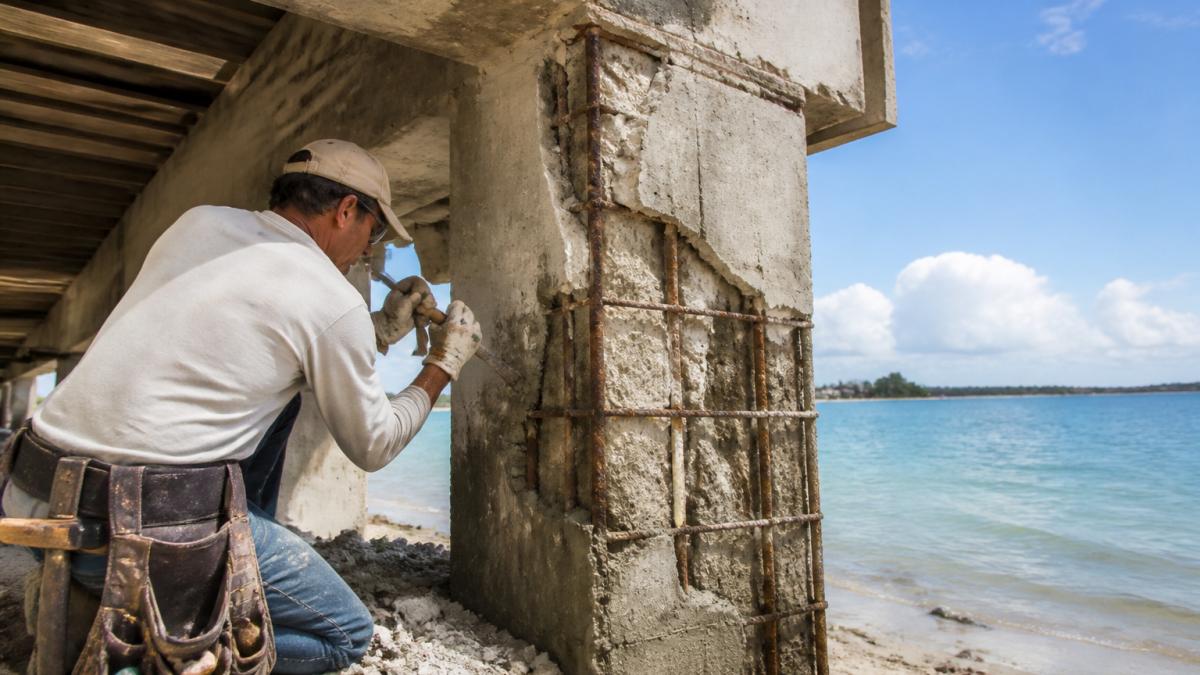
Repair makes sense when damage is localized, the wall is structurally sound, and the underlying soil is stable. Small cracks, spalling, or minor seepage can be sealed or patched. Drainage improvements can reduce pressure. Tiebacks or anchors can be reinforced. These interventions extend the wall's life significantly.
Replacement is necessary when the wall is structurally failing, when movement is active, or when repairs would be temporary fixes masking deeper problems. A wall that's tilting, a wall with large horizontal cracks, or a wall experiencing rapid soil loss will fail regardless of patch repairs. Replacement is the only permanent solution.
The decision depends on the wall's age, condition, and the underlying soil. This is where professional assessment matters. A marine contractor can evaluate whether repair will actually solve the problem or just delay failure.
We integrate engineering assessment with construction capability, so the solution we recommend is the one we can execute without coordination gaps.
Post-Storm Inspection and Documentation
After any significant storm or heavy rain event, inspect your seawall immediately.
Look for new cracks or widening of existing ones. Check for debris impact damage. Verify that the wall didn't move. Look for new seepage or water flow from the wall face.
Document everything with photos and measurements. Note the date and the weather event.
Check soil stability behind the wall. Storm surge and heavy rain can cause rapid soil loss. If the ground has settled noticeably or if new voids have appeared, drainage has been overwhelmed.
Post-storm is also when hidden damage becomes visible. Water infiltration, internal cracking, and structural stress often show up days or weeks after the event as water continues to move through the wall and soil shifts.
Seawall maintenance is an investment in your property's future. Regular inspection catches problems early. Seasonal maintenance prevents deterioration. Knowing when to call a professional stops small issues from becoming catastrophic failures.
Ready to move from scope to build? We understand Florida's coastal challenges because we build in them every day. Learn more about marine construction and coastal resilience from the American Society of Civil Engineers to understand the engineering principles behind effective seawall design, or contact us for a professional assessment of your seawall's current condition and what maintenance or repair will actually protect your investment.
Frequently Asked Questions
How often should a seawall be inspected?
Inspect your seawall at least twice yearly, once in spring before storm season and once in fall to prepare for winter weather. After major storms, inspect immediately for new damage. If you notice active erosion, drainage issues, or structural movement, increase inspections to monthly. Early detection of problems prevents expensive repairs and protects your property from soil loss and foundation damage.
What are the signs that a seawall needs repair?
Watch for cracks wider than 1/4 inch, horizontal or diagonal fractures, corrosion on metal components, voids or sinkholes behind the wall, water seeping through the structure, visible wall movement or tilting, and chunks of concrete or stone missing. Soil loss behind the wall, marine growth buildup, and debris accumulation also signal maintenance needs. Any of these warrant professional inspection to determine if repair or replacement is necessary.
Can seawall damage be repaired, or does the wall need to be replaced?
Many seawall problems can be repaired if caught early. Small cracks, minor corrosion, drainage issues, and surface damage often respond well to targeted repair. However, if the wall shows structural failure, severe tilting, large voids, extensive corrosion, or foundation compromise, replacement may be necessary. A marine contractor can assess the damage and recommend repair versus replacement based on the wall's age, material, and structural integrity.
How long can seawalls last?
Seawall lifespan depends on material and maintenance. Concrete walls typically last 30-40 years, vinyl bulkheads 20-30 years, and steel or aluminum 20-25 years. Regular maintenance, clearing debris, managing drainage, and addressing damage promptly, extends lifespan significantly. Neglected seawalls fail faster due to hydrostatic pressure buildup, corrosion, and unrepaired cracks. Proper seasonal care and professional inspection can add years to your wall's life and prevent costly emergency repairs.