 how-to
Structural Repair for Coastal Homes: A Step-by-Step Guide
Table of Contents
- Signs of Structural Damage in Coastal Homes
- How Salt Air and Corrosion Accelerate Structural Deterioration
- Coastal Foundation Repair Methods That Work
- When to Hire Engineering Firms for Home Repairs
- Post-Storm Emergency Assessment: What to Check First
- Insurance and FEMA Compliance for Coastal Repairs
- Preventative Maintenance to Extend Your Home's Life
- Frequently Asked Questions
Last Updated: September 28, 2026
Signs of Structural Damage in Coastal Homes
Coastal homes face unique threats. Salt air, moisture, and storm surge damage foundations in ways inland properties never experience. Recognizing early warning signs can save you thousands in repairs.
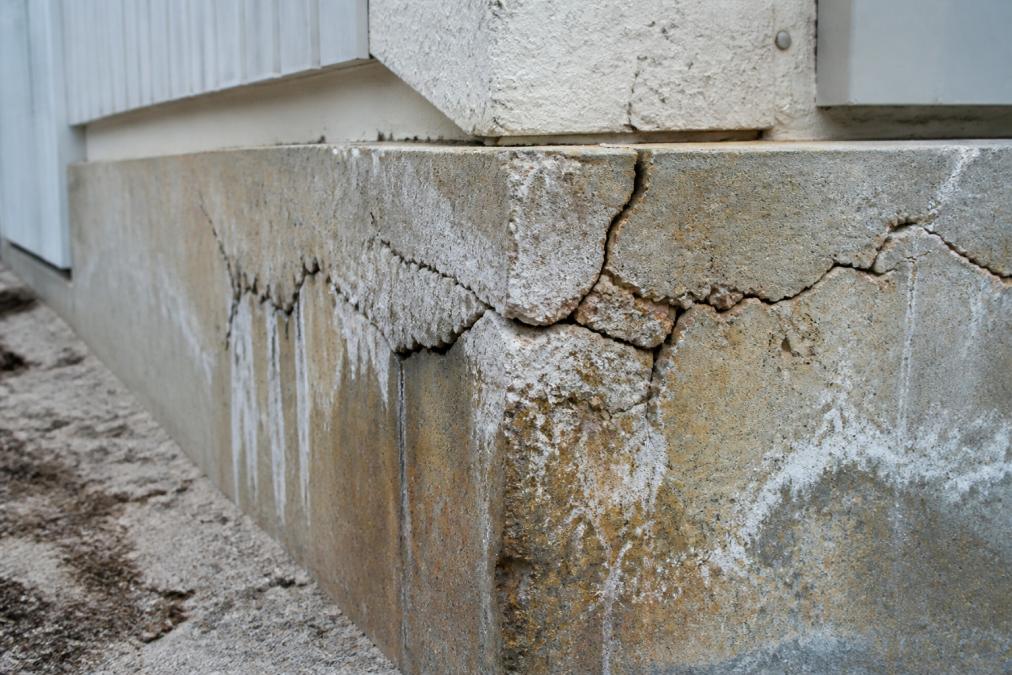
Look for these specific indicators of structural trouble:
- Horizontal cracks in foundation walls, these signal serious settlement or pressure issues
- Doors and windows that stick or won't close properly, a sign of structural movement
- Visible gaps between walls and the foundation, indicates shifting or settling
- Bowing or leaning exterior walls, dangerous and requires immediate assessment
- Crumbling or deteriorating mortar between bricks, salt spray accelerates this breakdown
- Water stains or efflorescence (white powder on concrete), shows moisture penetration
- Sagging floors or uneven ceilings, suggests compromised support beams
The most common mistake homeowners make is waiting too long. Small cracks become major structural repairs when left untreated.
How Salt Air and Corrosion Accelerate Structural Deterioration
Salt spray is relentless. It corrodes steel, degrades concrete, and weakens mortar faster than any inland environment. Understanding this process helps you prioritize maintenance and repairs.
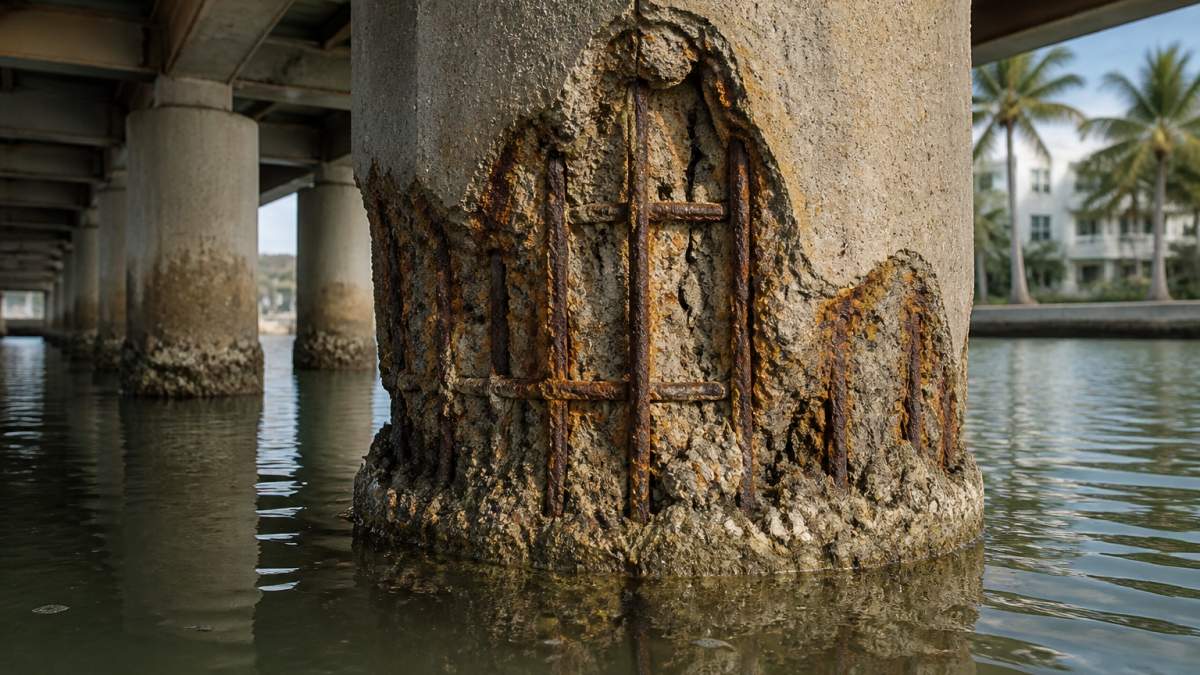
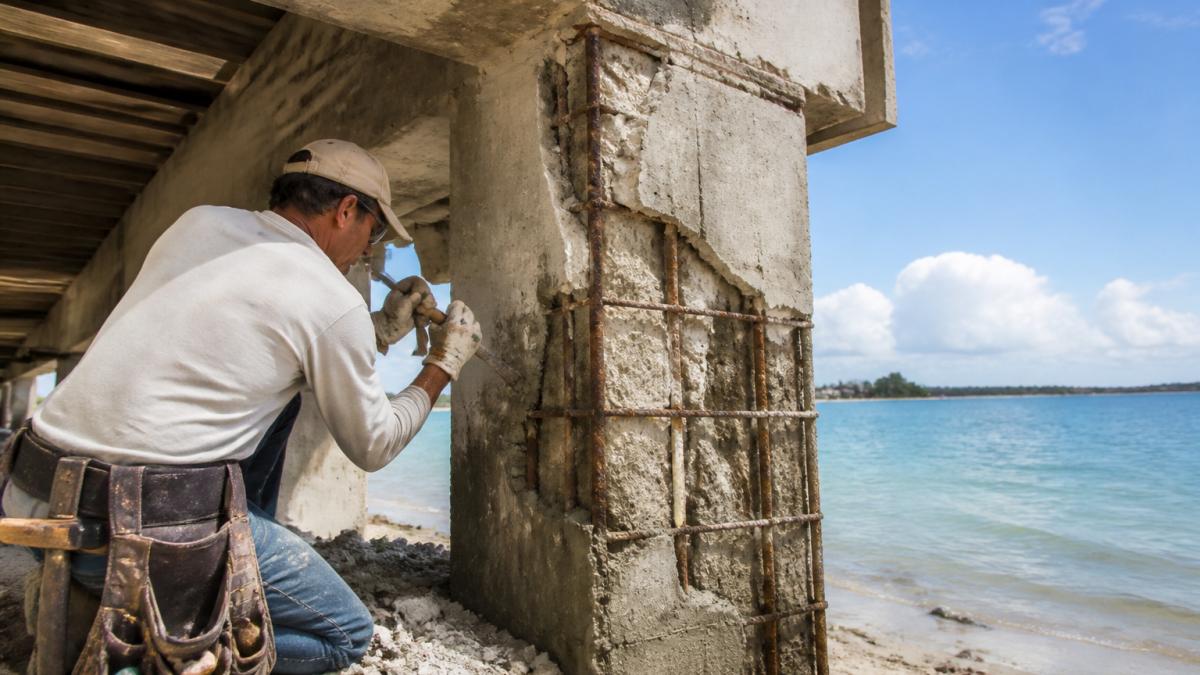
Salt-laden air attacks structural components in multiple ways. The salt crystals penetrate concrete and mortar, expanding as moisture cycles in and out. This expansion creates internal pressure that cracks and spalls the surface. Steel reinforcement inside concrete rusts when exposed to saltwater and salt air, expanding as it oxidizes and pushing outward on the concrete shell.
Galvanized steel offers better protection than bare steel but still deteriorates in coastal settings. Even galvanized finishes eventually fail under constant salt spray exposure. Rust-resistant finishes and marine-grade materials last significantly longer, which is why structural repair for coastal homes demands material choices different from inland construction.
Concrete spalling accelerates near the waterline and in splash zones. These areas experience constant wetting and drying cycles combined with salt exposure. The surface breaks apart, exposing deeper layers to further corrosion.
Mortar between bricks and stones crumbles faster in coastal environments. Salt-resistant mortar exists but costs more upfront. The long-term savings justify the expense when you're repairing foundations near saltwater.
Coastal Foundation Repair Methods That Work
Structural repair for coastal homes requires specialized techniques and materials. Standard inland repair methods often fail in salt-spray environments because they don't account for ongoing corrosion pressure.
Helical Piers and Load-Bearing Reinforcement
Helical piers work by transferring building load to deeper, stable soil layers. The pier screws into the ground like a giant corkscrew, avoiding the shallow soil affected by salt water and erosion.
This method suits coastal homes because it doesn't rely on surface soil stability. Coastal erosion and hydrostatic pressure constantly shift shallow soils. Helical piers reach stable bearing capacity below these unstable layers.
Installation involves:
- Excavating around the foundation to access the area needing support
- Positioning the helical pier assembly at the proper depth
- Screwing the pier into place using hydraulic torque equipment
- Attaching the pier to the foundation with a load-transfer bracket
- Backfilling and sealing the excavation
The process takes 1-3 days per pier, depending on soil conditions and depth requirements. Helical piers provide decades of stable support in challenging coastal soil.
Load-bearing reinforcement complements pier installation. Additional steel beams or posts redistribute weight to the new support system. This prevents stress concentration on weakened areas of your foundation.
Foundation Underpinning and Piling Stabilization
Underpinning strengthens existing foundations by adding new support underneath. This method works when the original foundation is sound but undersized or settling unevenly.
Piling stabilization uses driven piles (steel or concrete) to anchor the foundation to bedrock or stable soil. Coastal homes benefit from this approach because driven piles resist the lateral forces from storm surge and hydrostatic pressure.
The process involves:
- Drilling test holes to determine soil composition and bedrock depth
- Positioning pile-driving equipment over the foundation
- Driving piles through unstable soil to stable bearing layers
- Connecting piles to the foundation with steel brackets and load-transfer hardware
- Monitoring settlement and adjusting loads as needed
Subsurface investigation precedes all piling work. A structural engineer must understand your specific soil conditions, water table depth, and bedrock location.
Ready to move from scope to build? →
Moisture Barriers and Drainage System Upgrades
Moisture barriers stop water intrusion into foundation walls and basements. In coastal homes, hydrostatic pressure pushes water through concrete and mortar. A barrier system redirects this water away from the structure.
Common barrier systems include:
- Exterior waterproofing membranes, applied to the outside of foundation walls before backfilling
- Interior sump pump systems, collect and pump water away from the foundation
- French drains, perforated pipes surrounded by gravel that intercept groundwater
- Vapor barriers, prevent moisture migration through concrete slabs
When to Hire Engineering Firms for Home Repairs
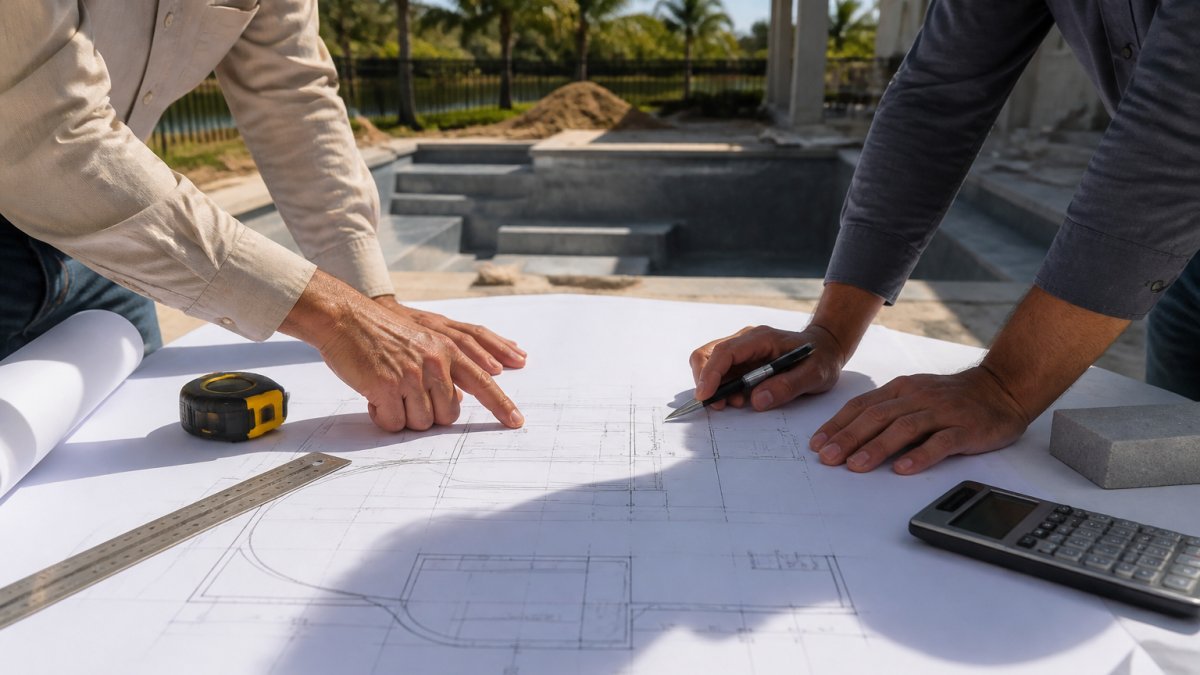
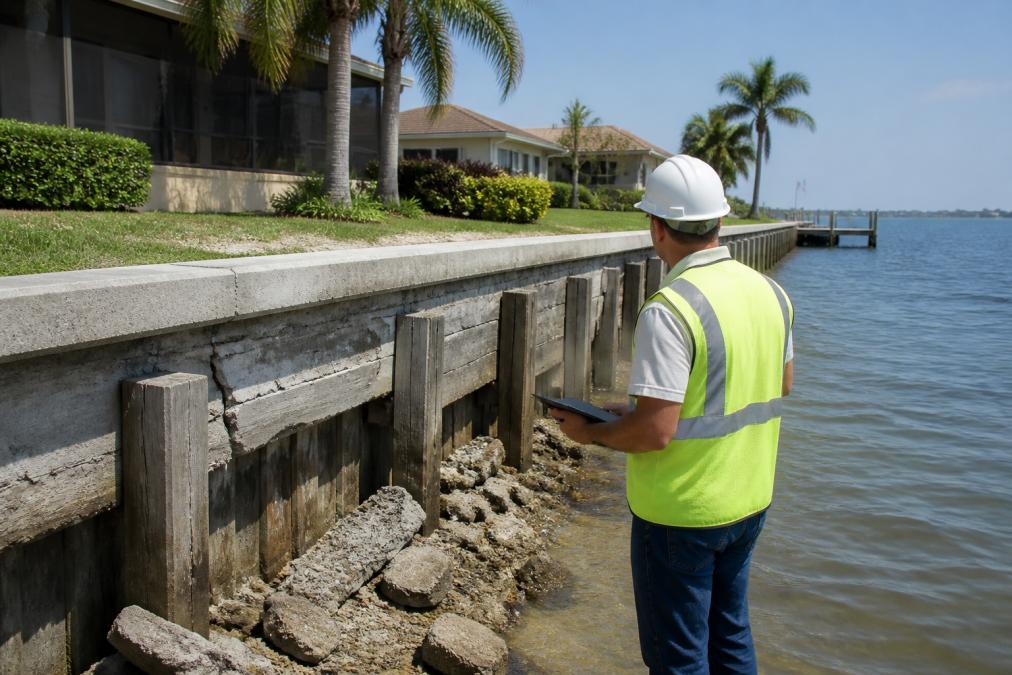
Not every foundation crack needs an engineer's assessment. But coastal properties have higher stakes. The combination of salt spray, hydrostatic pressure, and storm risk makes professional evaluation essential.
Hire a structural engineer when you observe:
- Horizontal cracks wider than 1/4 inch
- Multiple cracks in different areas of the foundation
- Bowing or leaning walls
- Doors and windows sticking consistently
- Visible settlement or uneven floors
- Water intrusion or dampness in basements
- Recent storm damage to the foundation or support structure
Post-Storm Emergency Assessment: What to Check First
After a hurricane or severe coastal storm, structural damage may not be immediately obvious. Water intrusion, foundation settling, and hidden cracks develop in days or weeks following the event.
Perform this emergency assessment immediately after a storm:
First 24 hours:
- Check foundation walls for new cracks, especially horizontal ones
- Look for water intrusion in basements or crawl spaces
- Inspect exterior walls for visible damage or shifting
- Test doors and windows for binding or misalignment
- Check for visible gaps between the house and foundation
Within one week:
- Have a structural engineer inspect the foundation and support system
- Document all damage with photos and measurements
- Check insurance documentation for coverage requirements
- Contact your insurance company to report damage
- Obtain engineering documentation before beginning repairs
Common post-storm findings include:
- New foundation cracks from ground movement
- Separation between the house and foundation from settling
- Hydrostatic pressure damage in basements or crawl spaces
- Corrosion acceleration from saltwater exposure
- Structural movement from wind or surge forces
Insurance and FEMA Compliance for Coastal Repairs
Coastal homeowners must navigate insurance requirements and FEMA guidelines when repairing structural damage. These regulations exist to ensure repairs meet safety standards and prevent future losses.
FEMA assistance for coastal properties includes specific requirements:
- Engineering assessment by a licensed professional engineer
- Repair specifications that meet current building codes
- Documentation of materials used and installation methods
- Inspection and approval before final payment
Preventative Maintenance to Extend Your Home's Life
Regular maintenance prevents small problems from becoming major structural repairs. Coastal homes require more frequent maintenance than inland properties due to salt spray and moisture exposure.
Annual maintenance tasks:
- Inspect foundation walls for new cracks or spalling
- Check mortar between bricks and stones for deterioration
- Examine drainage systems and clear gutters of debris
- Test sump pumps and ensure they operate properly
- Inspect exterior seals and caulking around windows and doors
- Check for signs of water intrusion in basements or crawl spaces
- Trim trees to prevent branches from damaging the structure
Every 3-5 years:
- Reapply marine-grade sealant to exposed concrete and masonry
- Have drainage systems cleaned and inspected
- Check galvanized steel components for rust and corrosion
- Inspect piers and support beams for structural movement
- Test the integrity of moisture barriers
| Maintenance Task | Frequency | Priority | Cost Impact |
|---|---|---|---|
| Foundation crack inspection | Annually | High | Prevents major repair costs |
| Sealant reapplication | Every 3-5 years | High | Extends concrete life decades |
| Drainage system cleaning | Annually | Medium | Prevents water damage |
| Corrosion inspection | Every 2 years | High | Catches rust before failure |
| Professional assessment | Every 3 years | High | Identifies hidden problems |
Frequently Asked Questions
What are the most common signs of structural damage in coastal homes?
Look for horizontal or diagonal cracks in foundation walls, uneven floors, doors and windows that stick or won't close properly, and visible spalling or discoloration of concrete. Salt spray damage appears as white crystalline deposits or rust stains on structural elements. Foundation settlement causes visible gaps between walls and ceilings. These signs indicate your home needs a structural assessment from a qualified engineer.
When should you hire an engineering firm for home repairs?
Hire an engineer immediately if you notice foundation cracks wider than 1/4 inch, signs of foundation settlement, water intrusion in basements or crawl spaces, or after significant storm damage. Engineers provide subsurface investigation, structural assessments, and stamped drawings required for permits and insurance claims. Their geotechnical analysis determines whether you need helical piers, underpinning, or other stabilization methods before contractors begin work.
How does salt air affect coastal home foundations?
Salt spray accelerates corrosion of steel reinforcement in concrete and deteriorates mortar joints in masonry foundations. Chloride penetration weakens concrete structural integrity over time, especially in the splash zone near water. Galvanized steel and marine-grade materials resist corrosion better than standard construction materials. Regular maintenance and drainage improvements help mitigate salt damage, but severely corroded foundations may require reinforcement or replacement sections.
What is the difference between standard and coastal structural repair?
Coastal repairs must account for salt-resistant materials, higher wind loads per coastal building codes, hydrostatic pressure from storm surge, and soil liquefaction risks. Engineers specify marine-grade materials, rust-resistant finishes, and reinforced load-bearing systems. Repairs often include seismic retrofitting and enhanced drainage to handle Florida's unique soil and water challenges. Standard repairs don't address these specialized coastal requirements, making professional engineering assessment essential.