 how-to
Marine Construction Seawall Repair Costs 2026
Table of Contents
- What Drives Seawall Repair Costs in 2026
- Seawall Structural Assessment Cost: What to Expect
- Seawall Repair vs Replacement Analysis
- The Marine Construction Permitting Process and Fees
- DIY vs Professional Seawall Repair: Risks and Real Costs
- Insurance and FEMA Claim Navigation for Seawall Damage
- Soil and Erosion Mitigation: Protecting Your Investment
- Conclusion
- Frequently Asked Questions
Last Updated: September 27, 2026
What Drives Seawall Repair Costs in 2026
Seawall repair costs in 2026 depend on three things: material prices, labor rates, and how badly the wall has failed. Marine construction seawall repair costs have climbed as concrete, steel, and marine-grade hardware get more expensive.
Material and Labor Cost Inflation
Material costs are the largest single driver of any seawall repair quote. Concrete, steel sheet pile, and marine-grade fasteners all cost more than they did a few years ago, and that trend has not reversed.
Expect these line items on most estimates:
- Sheet pile or panel material
- Concrete cap and cap reinforcement
- Tie-back anchors and hardware
- Riprap and geotextile fabric
- Barge, crane, and crew time
Damage Severity and Structural Integrity
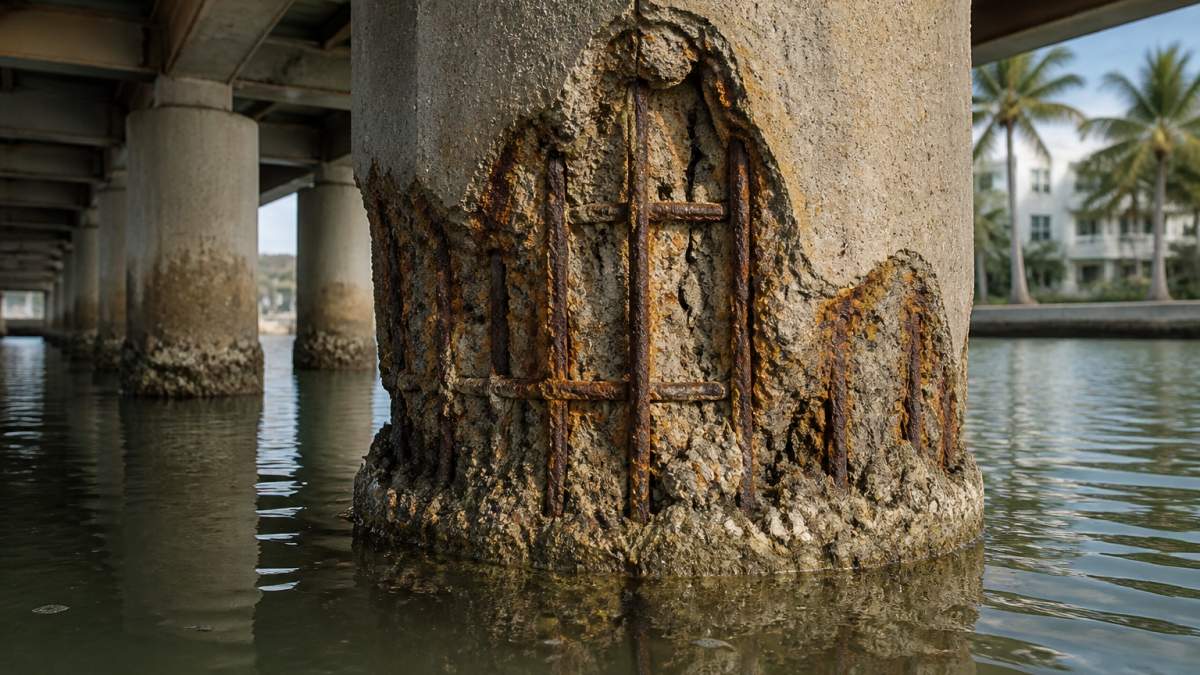
Damage severity decides whether you are patching a wall or rebuilding it. A cracked concrete cap is a small job. A wall that has lost its tie-back system is a structural problem.
Watch for these signs of seawall failure:
- Leaning or bulging panels
- Soil washing out behind the wall
- Visible cracks wider than a pencil
- Sinkholes or soft spots in the yard
- Water pooling where it never used to
Seawall Structural Assessment Cost: What to Expect
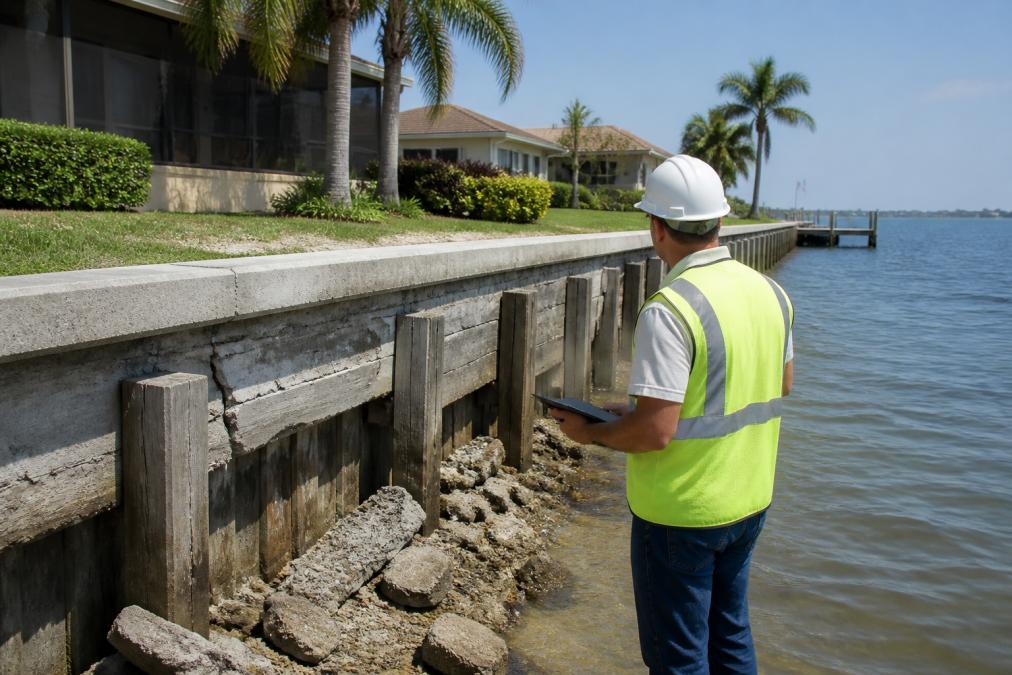
A seawall structural assessment cost is usually the smallest line item in the project and the one that saves the most money, because it tells you what is actually wrong before anyone quotes a fix.
What the assessment covers:
- Wall alignment and panel condition
- Tie-back and anchor integrity
- Soil conditions behind the wall
- Corrosion resistance of hardware
- Tidal influence on the structure
Seawall Repair vs Replacement Analysis
The repair-versus-replace decision comes down to one question: can the existing structure carry the load for another 15 to 20 years? If yes, repair is cheaper; if no, replacement wins. Replacement typically runs several times the cost of a targeted repair, which is why getting the diagnosis right matters more than getting the quote low.
The Cost Spread, in Plain Terms
Repair and replacement sit on different orders of magnitude:
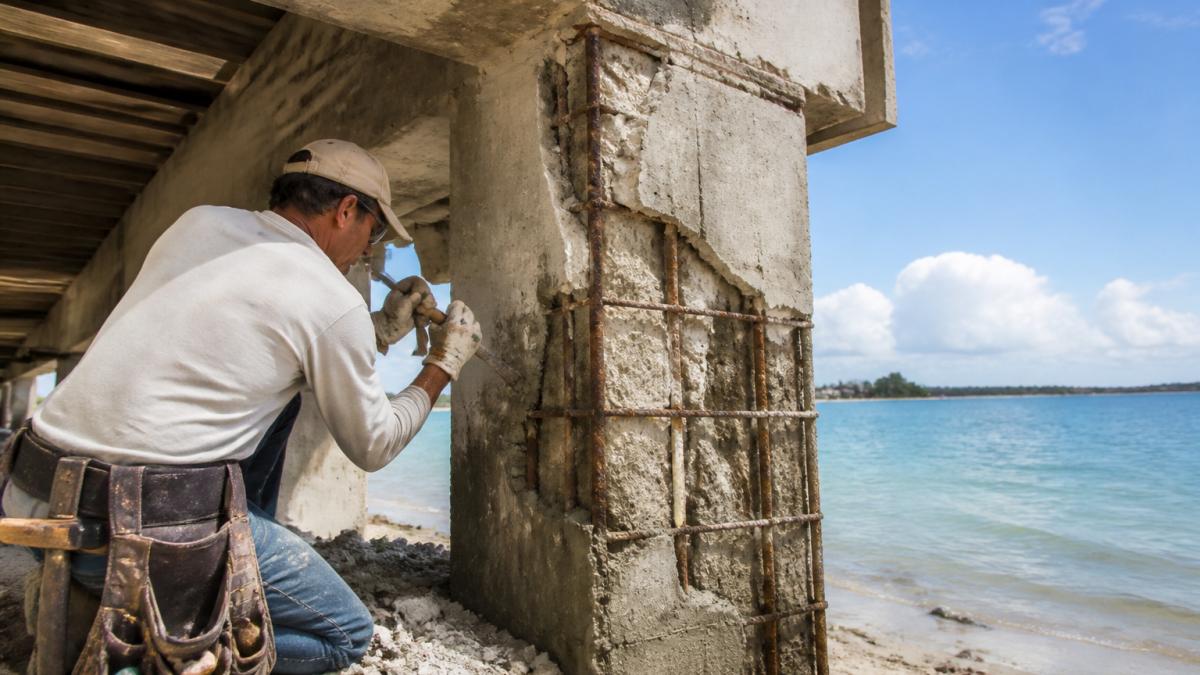
- Cosmetic and cap-level repair, patching a concrete cap, sealing joints, replacing a handful of panels. This is the lowest tier and is usually measured in the low hundreds per linear foot.
- Structural repair, void filling, new tie-back anchors, panel replacement, re-grading behind the wall. This lands in the mid hundreds per linear foot and often requires engineered drawings.
- Full replacement, removing the existing wall, driving new sheet pile or installing a new panel system, new cap, new tie-backs, and full restoration of the shoreline. This is the highest tier and is typically quoted in the high hundreds to low four figures per linear foot depending on wall height, depth of embedment, and site access.
A 100-foot wall can swing from a five-figure repair to a six-figure replacement, which is why a structural assessment is not optional.
When Repair Makes Sense
Repair works when the wall is sound but damaged. Good candidates share a few traits:
- Panels are plumb and intact
- Tie-backs are still holding
- Damage is limited to the cap or a few panels
- The wall is under 25 years old
When Replacement Is the Better Investment
Replacement makes sense when the wall has lost structural integrity. A wall that has settled, rotated, or lost its anchors will keep failing no matter how many patches you apply.
Replacement is also the smarter call when:
- More than a third of the wall is compromised
- The wall predates current marine engineering standards
- You plan to hold the property long term
- The wall height is inadequate for current flood and surge expectations
Why 2026 Quotes Look Different Than 2020 Quotes
The number on a 2026 estimate is not just the 2020 number plus labor, it reflects specific input costs that have moved independently:
- Cement and concrete. Cement is energy-intensive to produce, and domestic supply has been tight as plants have been upgraded and consolidated. Concrete cap and cap reinforcement pricing reflects that.
- Steel sheet pile. Steel pricing tracks global scrap and mill demand, and imported sheet pile carries tariff and freight exposure. Contractors who quote steel today often hold pricing for a shorter window than they did five years ago.
- Marine-grade hardware. Stainless and hot-dip galvanized fasteners, tie-back rods, and anchor hardware have all seen input cost pressure. Substituting non-marine hardware to save money is one of the most expensive mistakes on a waterfront.
- Specialized labor. Marine crews work from barges, inside tidal windows, and around weather. The pool of contractors who can do that work is small, and the labor rate reflects it.
- Equipment and mobilization. Barge time, crane time, and mobilization are fixed costs that do not shrink with a smaller job, which is why a small repair on a hard-to-access wall can cost disproportionately more.
Side-by-Side Comparison
| Factor | Repair | Replacement |
|---|---|---|
| Best for | Sound walls, minor damage | Failed or aging walls |
| Typical cost tier | Low to mid hundreds per linear foot | High hundreds to low four figures per linear foot |
| Lifespan added | 5-15 years | 30+ years |
| Engineering required | Sometimes | Almost always |
| Permitting | Often lighter | Usually full permit |
| Disruption | Low to moderate | High |
| Long-term value | Depends on wall age | Strong |
The Marine Construction Permitting Process and Fees
The marine construction permitting process involves multiple agencies, and the fees add up fast. Most waterfront work touches local building departments, state environmental regulators, and sometimes federal agencies. The biggest cause of project delay is not construction, it is a permit application filed before the scope was fully engineered.
Ready to move from scope to build? →
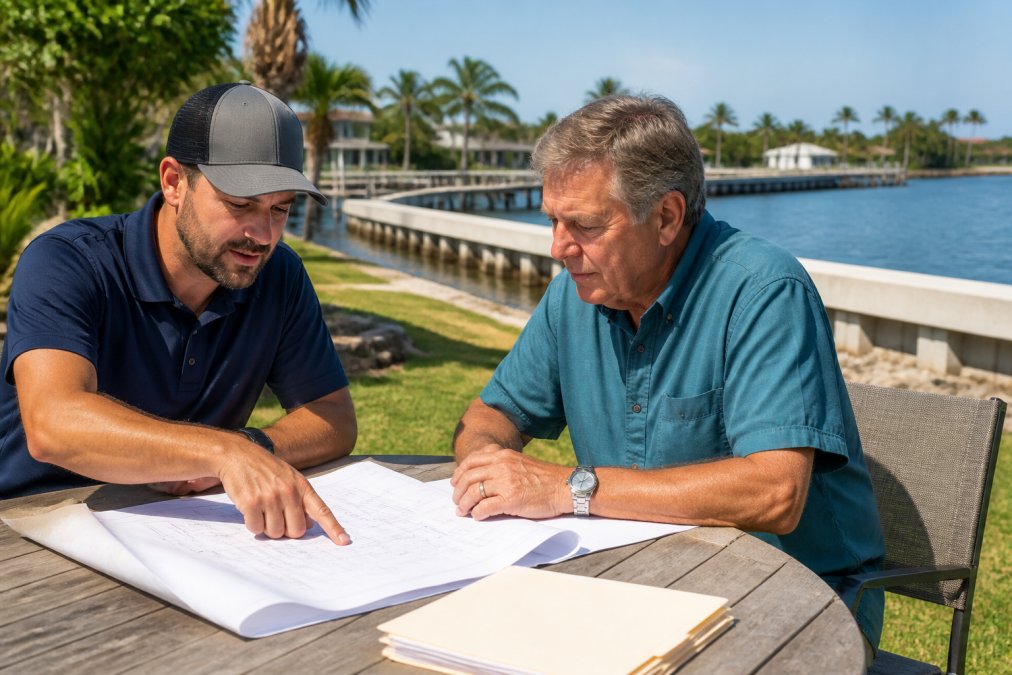
Who Has Jurisdiction Over Your Wall
Depending on where the wall sits relative to the mean high water line, you may be dealing with:
- Local building department, structural permit for the wall itself, plus inspections.
- State environmental or coastal regulator, review of any work in, over, or adjacent to tidal waters. This is often the longest pole in the tent.
- Federal agencies, if the work touches navigable waters, wetlands, or federally protected shoreline, a federal permit or authorization may be required in addition to state review.
- County or municipal shoreline authority, some jurisdictions layer their own shoreline or dune protection rules on top of state requirements.
The General Sequence
- Site assessment and survey, establish the mean high water line, wall alignment, and existing conditions.
- Engineered drawings and stamped plans, most environmental reviewers will not accept a scope without them.
- Local building permit application, structural review and inspection scheduling.
- Environmental review, state (and sometimes federal) review of impacts to the shoreline, submerged lands, and protected species windows.
- Inspection and final approval, often staged, with a pre-construction and post-construction inspection.
What the Fees Actually Cover
Permit fees are not one number but a stack of separate charges, and budgeting for only the building permit is a common mistake:
- Building permit fee, typically scaled to project valuation or wall length.
- Environmental or coastal permit fee, often a flat application fee plus a per-linear-foot or per-acre component.
- Plan review fee, charged separately from the permit itself in many jurisdictions.
- Inspection fees, sometimes bundled, sometimes billed per visit.
- Survey and engineering fees, not a government fee, but a required input for most applications.
- Mitigation or restoration fees, if the project disturbs vegetation or shoreline habitat, some jurisdictions require a fee or on-site mitigation.
What Actually Drives the Timeline
Two projects with identical walls can differ by months in approval time. The variables that matter most:
- Whether the scope is fully engineered at submittal. Incomplete packages get returned, and the clock restarts.
- Whether the work falls inside a protected species or nesting window. Many coastal jurisdictions restrict in-water work to specific months.
- Whether the project is repair or replacement. Repair scopes that stay landward of the mean high water line often avoid the heaviest environmental review.
- Whether a private provider is available. Some jurisdictions allow private providers to review plans and perform inspections in parallel with the county, which can shorten the wait.
DIY vs Professional Seawall Repair: Risks and Real Costs
DIY seawall repair looks cheap until something goes wrong. The real risk is not the labor but the liability: a wall that fails after a DIY fix can undermine your yard, your neighbor's property, and your insurance coverage.
Common DIY mistakes:
- Filling voids without fixing the water path behind the wall
- Using non-marine fasteners that corrode in salt air
- Skipping the tie-back system entirely
- Ignoring hydrostatic pressure during the dry season
Insurance and FEMA Claim Navigation for Seawall Damage
Insurance and FEMA claims for seawall damage are rarely straightforward. Most standard homeowner policies exclude gradual erosion, so the claim usually hinges on whether the damage came from a single storm event.
What helps a claim:
- A dated inspection report before the storm
- Photo documentation of the damage
- A written engineer's opinion on the cause
- Proof the wall met code at the time of loss
Soil and Erosion Mitigation: Protecting Your Investment
Soil and erosion mitigation protects the wall you just paid to fix. Without it, the same forces that destroyed the old wall will attack the new one.
Core mitigation methods:
- Riprap placement along the toe of the wall
- Geotextile fabric behind panels to stop soil loss
- Void filling to close gaps under the cap
- Grading to move runoff away from the wall
- Native plantings for shoreline protection
Conclusion
Seawall repair is one of those projects where the cheapest quote often costs the most over time. The right fix starts with an honest assessment, a clear repair-versus-replace call, and a team that can handle engineering and construction under one roof. The right fix starts with an honest assessment, a clear repair-versus-replace call, and a team that can handle engineering and construction under one roof.
Frequently Asked Questions
How much does it cost to repair a seawall?
Seawall repair costs depend on the damage extent, materials, and site conditions. Minor crack repairs and concrete cap replacement cost significantly less than full panel replacement or tie-back system installation. Factors like tidal influence, soil stabilization needs, and permit fees also affect the total. For an accurate estimate, request a structural assessment from a licensed marine contractor who can evaluate your specific seawall and provide a detailed scope of work.
Is seawall repair covered by standard homeowners insurance?
Standard homeowners insurance typically excludes seawall repair because it is considered a retaining wall or shoreline protection structure, not part of the dwelling. However, if damage results from a covered peril like a hurricane or storm surge, some policies may provide partial coverage. FEMA may assist with shoreline protection in declared disaster areas. Review your policy carefully and document all damage with photos before filing any claim.
Why is a structural assessment necessary before starting seawall repairs?
A structural assessment identifies the root cause of visible damage. Surface cracks may indicate deeper issues like hydrostatic pressure buildup, foundation settlement, or corrosion of the sheet pile. Without an assessment, repairs may address symptoms rather than the actual problem, leading to premature failure. Assessments also provide stamped drawings needed for permits. Expect to pay for this service, but it prevents costly mistakes and ensures your repair meets load-bearing capacity requirements.
How can I tell if my seawall requires professional engineering intervention?
Warning signs include visible leaning or bulging, large cracks wider than a quarter inch, soil loss behind the wall, exposed or rusted tie-back anchors, and water pooling where it shouldn't. If you notice any of these, contact a marine engineer promptly. Delaying inspection can lead to sudden failure, especially during hurricane season. A professional can determine whether repair, reinforcement, or replacement is the safest and most cost-effective path.