 listicle
Benefits of Hiring Private Building Inspectors
Last Updated: October 23, 2026
Quick Summary
Hiring private building inspectors gives you independent findings, faster scheduling, and documentation you can hand to a lender, insurer, or attorney. Because a private inspector works for you rather than the builder or permitting office, defects are reported as written and corrections can happen before the next phase starts.
- A private inspector works for the owner, while municipal inspectors answer to the jurisdiction and builder-provided inspectors protect the builder.
- Private provider inspections consolidate plan review and field inspection, removing the handoff where most permit delays occur.
- Schedule each phase inspection at least 48 hours before the next trade is due on site.
- Skipping the pre-drywall visit is the most expensive mistake because corrections then require demolition.
- Request a sample report and check for photos with locations, code references, severity ratings, and repair recommendations.
Table of Contents
- Why Private Building Inspectors Change the Outcome of a Project
- The Core Benefits of Hiring Private Building Inspectors
- Private Inspector vs. Municipal Inspector vs. Builder-Provided Inspector
- How Private Provider Building Inspections Speed Up Permitting
- What a Construction Phase Inspection Covers at Each Milestone
- Building Inspection Checklist: What to Verify Before You Hire
- Structural Inspection for Home Repairs: Catching Defects Early
- Conclusion
- Frequently Asked Questions
Why Private Building Inspectors Change the Outcome of a Project
The U.S. building inspection industry is worth $6.8 billion in 2026, according to IBISWorld's building inspectors industry analysis, and that scale tells you something important: inspection is no longer a box checked by a single municipal reviewer on a fixed schedule. Hiring private building inspectors puts a licensed third party on site at the moments that decide whether a project closes clean or bleeds money.
The core argument is simple. A private inspector works for you, not the builder and not the permitting office. That single change in who signs the report reshapes what gets caught, when it gets caught, and how fast the project moves.
The Core Benefits of Hiring Private Building Inspectors
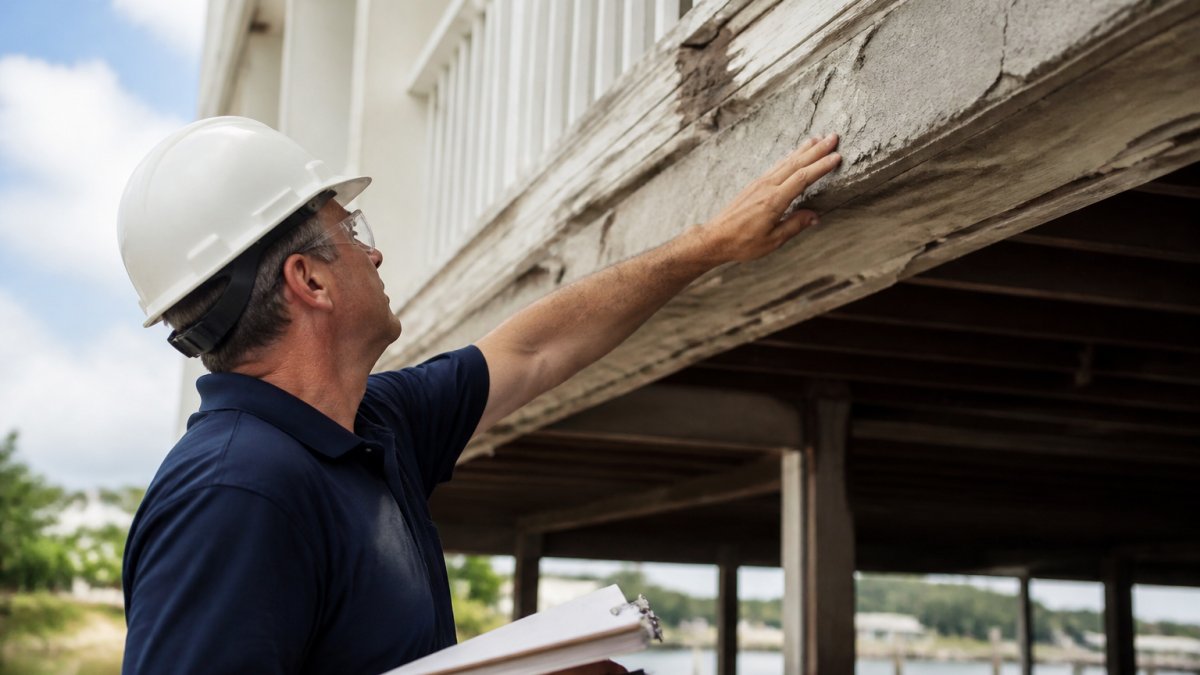
The clearest benefits of hiring private building inspectors are independent findings, faster scheduling, and documentation you can hand to a lender, insurer, or attorney. A private inspector has no incentive to soften a defect report and no queue tied to a county calendar.
Independent Findings You Can Act On
Private inspection is an independent review of workmanship against building code and the approved plans. Because the inspector has no financial relationship with the contractor, findings land as written: a cracked truss, an improperly flashed window, a moisture reading that points to a hidden leak. The Florida Bar Journal notes that more thorough inspections lead to better workmanship, fewer defect claims, and fewer warranty claims. That is the real return: problems priced at repair cost instead of litigation cost.
Direct Communication and Faster Scheduling
You call the inspector directly. No gatekeeper, no ticket number, no waiting for a callback that arrives next week. In practice, this means a defect found on Tuesday can be corrected and re-inspected before the next phase starts, rather than stalling a crew for a month.
Private Inspector vs. Municipal Inspector vs. Builder-Provided Inspector
The three roles are not interchangeable. A municipal inspector enforces code for the jurisdiction and answers to the public. A builder-provided inspector protects the builder's schedule and warranty exposure. A private inspector works for the party paying the fee, which is usually the owner.
| Inspector type | Works for | Scheduling control | Typical scope |
|---|---|---|---|
| Municipal | The jurisdiction | County queue | Code compliance only |
| Builder-provided | The builder | Builder's timeline | Quality control for the builder |
| Private | The owner | You set the date | Code, workmanship, and defect documentation |
The gap most owners miss is what happens after the report. A municipal inspector issues a pass or fail; a private inspector hands you a written record with photos and repair recommendations you can use to negotiate, withhold payment, or file a claim.
How Private Provider Building Inspections Speed Up Permitting
Private provider building inspections are plan reviews and inspections performed by a state-authorized private entity instead of the local building department.
The mechanics matter more than the marketing. When one entity holds the plan review, the inspection, and the engineering stamps, corrections loop back to the same desk. Take Off Construction Management operates as a private provider with two engineers on staff, which means the review and the field inspection answer to the same accountability.
Ready to move from scope to build? →
What a Construction Phase Inspection Covers at Each Milestone
A construction phase inspection is a staged site visit that verifies work at defined milestones before it gets covered up. Each stage has a different failure mode, and each one is cheap to fix before the next trade arrives and expensive after.
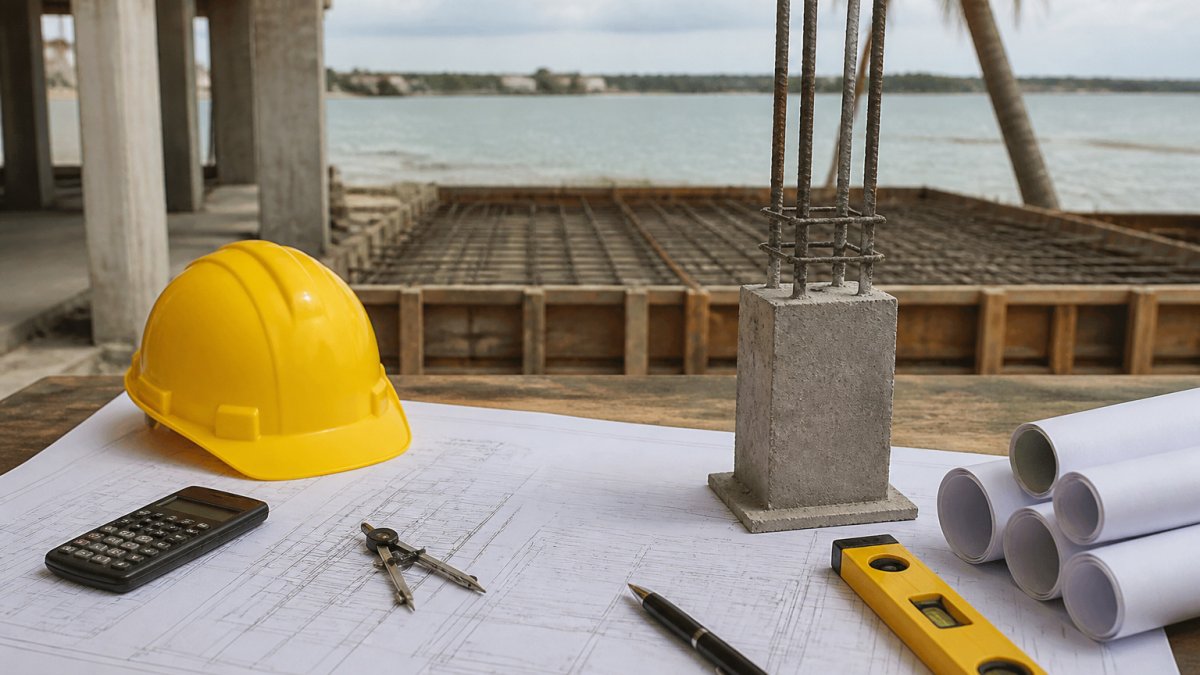
- Foundation and slab (pre-pour): verify form dimensions and elevation, reinforcement size, spacing, and cover, anchor bolt placement, and grading and drainage before concrete is placed. A missed rebar chair or a form out of square is a demolition problem after the pour, not a repair.
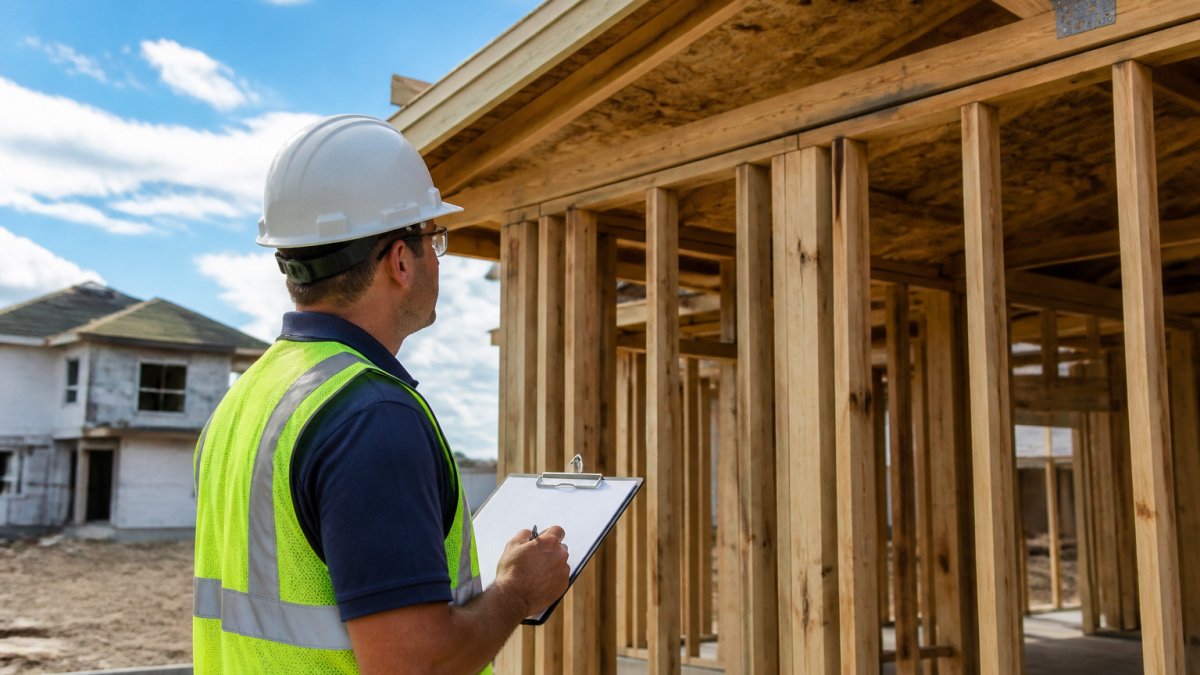
- Framing and sheathing: check structural members for species, grade, and span against the approved plans, verify connections and hardware, confirm window and skylight flashing and integration with the weather-resistive barrier, and look for framing that blocks insulation or creates thermal bridging. Flashing errors at openings are among the most common sources of hidden water intrusion.
- Roof: inspect roof condition, underlayment installation, ice-and-water membrane placement at valleys and eaves, and leak paths at penetrations such as vents, chimneys, and skylights. Roof defects are rarely visible from inside until staining appears, by which point the decking may be compromised.
- Rough-in (pre-drywall): verify HVAC system routing, duct sizing and sealing, plumbing drain slope and venting, and electrical chases and box placement before drywall closes the wall. This is the last visit where a misrouted duct or a missing fireblock can be corrected without demolition.
- Final inspection: confirm finishes, code compliance, and a punch list with photos, and verify that prior-stage corrections were actually made. A final walkthrough that does not reference the earlier reports is a missed opportunity to close the loop.
What most guides miss is that the inspection report should be cumulative. Each stage's findings should be cross-referenced against the prior report so the owner can see whether the builder corrected what was flagged.
Building Inspection Checklist: What to Verify Before You Hire
Use this building inspection checklist before you sign anything. It takes about twenty minutes and it separates a qualified inspector from a confident salesperson. The difference between a checklist that works and one that just looks thorough is that each item below tells you what a good answer sounds like, not just what to ask.
- License and certification: confirm the license number with the state licensing board, not just the website. Ask which certification the inspector holds and whether it requires continuing education. A license that cannot be verified against a state database is a red flag, not a paperwork delay.
- Insurance: ask for current general liability and errors and omissions (E&O) coverage and request a certificate of insurance naming you as an additional insured where possible. General liability covers property damage and bodily injury on site; E&O covers professional errors in the report itself. An inspector with liability coverage but no E&O is not protected against the claim most likely to matter to you.
- Scope of inspection: get the written scope, including what is excluded. Read the exclusions page first. Common exclusions include roof interiors, HVAC internals, concealed spaces, and anything requiring destructive testing. A scope that lists what is covered but not what is excluded is incomplete.
- Experience and training: ask how many inspections of your construction type they have completed in the last twelve months, not how many years they have been in business. Experience with your building type, coastal, historic, multifamily, or light commercial, matters more than total tenure.
- Inspection standards: confirm which standard the report follows, such as a recognized residential or commercial inspection standard, and whether the report is organized by system and location so a contractor can act on it.
- Sample report: request one and check for photos with locations, defect descriptions tied to a standard or code reference, severity ratings, and repair recommendations. A report that lists findings without locations or photos is hard to enforce and easy for a builder to dispute.
- Availability and service area: confirm they can reach your site within your phase schedule, and ask what happens if a phase inspection needs to be rescheduled. A private inspector's scheduling advantage disappears if the inspector is overbooked.
Structural Inspection for Home Repairs: Catching Defects Early
A structural inspection for home repairs is an assessment of load-bearing elements, connections, and movement indicators before repair work begins. The Bureau of Labor Statistics occupational data puts the median annual wage for construction and building inspectors at $74,690 as of May 2025, which reflects the technical judgment the role demands rather than a visual walkthrough.
What most guides miss is sequencing. A structural inspection should happen before the repair scope is priced, not after. When an engineer identifies the actual defect, whether that is a failed connection, settlement, or water damage behind a wall, the repair recommendation is written against a known condition instead of an assumption.
Conclusion
The hardest part of any project is not finding an inspector. It is finding one whose findings you can act on before the next phase buries them.
Take Off Construction Management brings two engineers on staff, private provider status for plan review and inspections, and a single point of accountability from assessment through field execution. If you are weighing a repair, an addition, or a coastal build and want the inspection and the engineering on the same timeline, get started with Take Off Construction Management and move from scope to build with the documentation already in hand.
Frequently Asked Questions
What are the main benefits of hiring private building inspectors?
The biggest benefits are independence, speed, and depth of documentation. A private building inspector works for you, not the builder or the municipality, so findings go straight to you. You get direct communication, flexible scheduling, and a detailed inspection report you can use to negotiate repairs or hold a contractor accountable. Thorough inspections are also linked to better workmanship and fewer defect and warranty claims, according to The Florida Bar Journal. For construction projects, private provider building inspections can also shorten the plan review and inspection timeline compared with standard county queues.
How is a private building inspector different from a municipal inspector?
A municipal inspector enforces building code compliance for the jurisdiction and signs off on permits, but they are not working for you and their schedule is not yours. A private inspector is hired by the property owner to protect the owner's interests. They can spend more time on site, document defects in detail, and flag maintenance and safety issues a code-focused visit may not surface. In Florida, a private provider can also perform required inspections under the private provider program, which can reduce permitting wait times. The two roles are complementary, not interchangeable.
What should I look for when hiring a building inspector?
Use a building inspection checklist: verify the inspector's license and certification, confirm they carry general liability and errors and omissions insurance, and ask how many years of field experience they have in the specific construction types you own. Ask what the scope of inspection covers and what is excluded, whether the roof, windows, skylights, HVAC system, and moisture detection are included, and request a sample inspection report. Confirm the service area and availability, and ask whether you will get direct communication with the inspector who performed the site visit.
When should I schedule a private inspection during a construction project?
Schedule a construction phase inspection at each major milestone: foundation and slab, framing, roof and weather barrier, and final walkthrough. For a pre-purchase or structural inspection for home repairs, book it before you sign and again after repairs are completed. Early inspections catch defects while they are still cheap to fix. The Florida Bar notes that more thorough inspections lead to better workmanship and fewer defect and warranty claims, which is the practical argument for inspecting at multiple stages rather than once at the end.