 blog
7 Signs of Seawall Failure to Watch For
Last Updated: November 19, 2026
Quick Summary
Seawall failure rarely happens overnight, so watch for seven warning signs: cracks, leaning or bowing sections, shifting panels, soil loss behind the wall, sinkholes, water pooling, and rust or corroded steel. Inspect your seawall at least twice a year and after any major storm.
- Check seawalls at least twice a year and after any major storm.
- Stop using any dock or lift attached to a leaning or bowing section and call an engineer.
- Recheck a visible crack in 30 days after photographing and marking its length.
- Keep people and vehicles away from sinkholes or sunken ground and get it assessed right away.
- Clear weep holes and drains, then have the drainage system inspected if water is pooling.
Table of Contents
- The 7 Signs of Seawall Failure, and What to Do About Each
- Repair Options, Lifespan, and When Replacement Makes Sense
- Booking a Seawall Inspection in Southwest Florida
- Frequently Asked Questions
The 7 Signs of Seawall Failure, and What to Do About Each
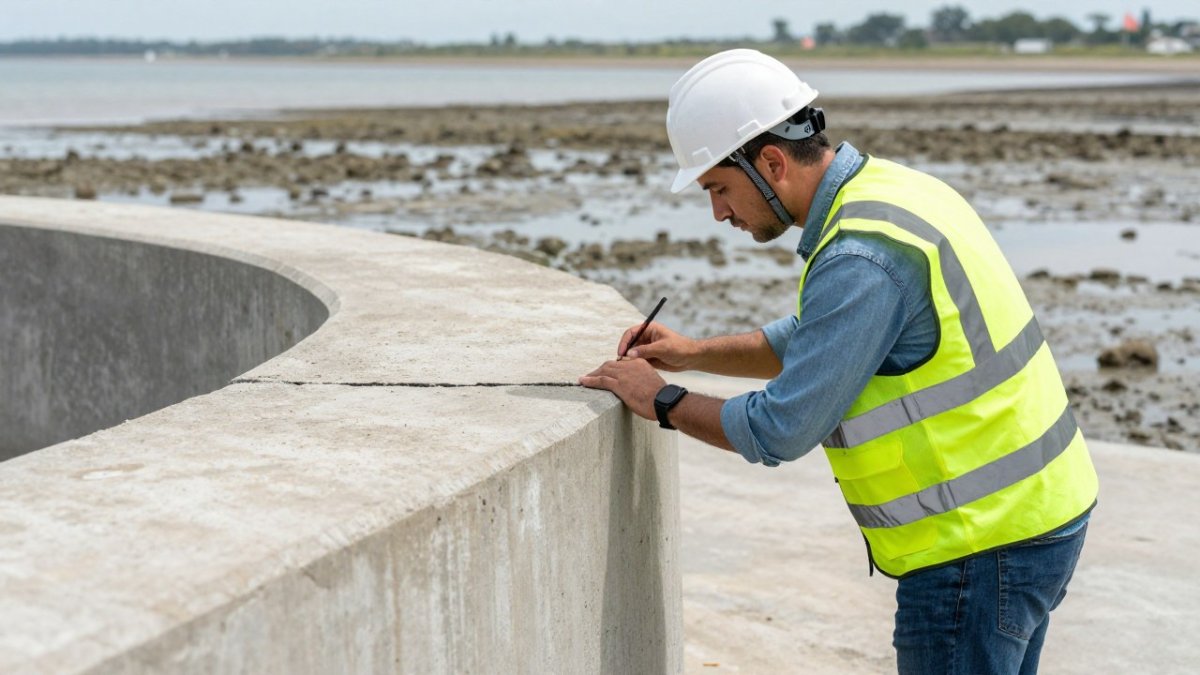
Seawall failure rarely happens overnight, a wall that looks fine from the dock can be losing ground behind it for years. Seawalls should be checked at least twice a year and after any major storm.
-
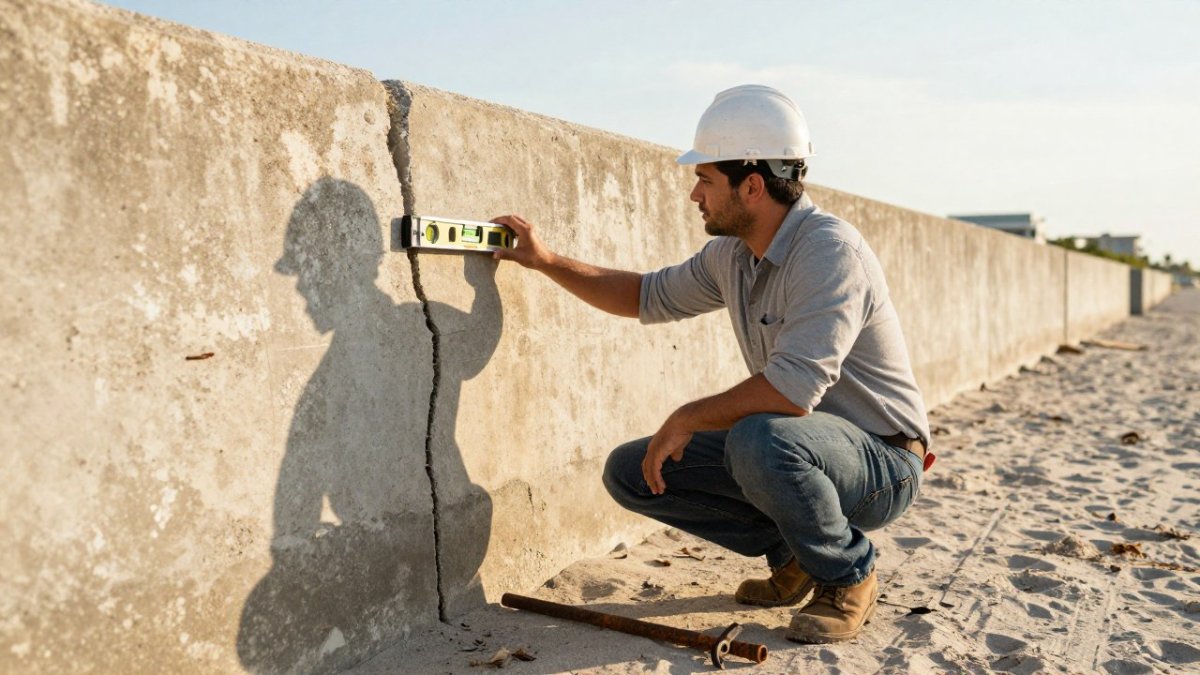
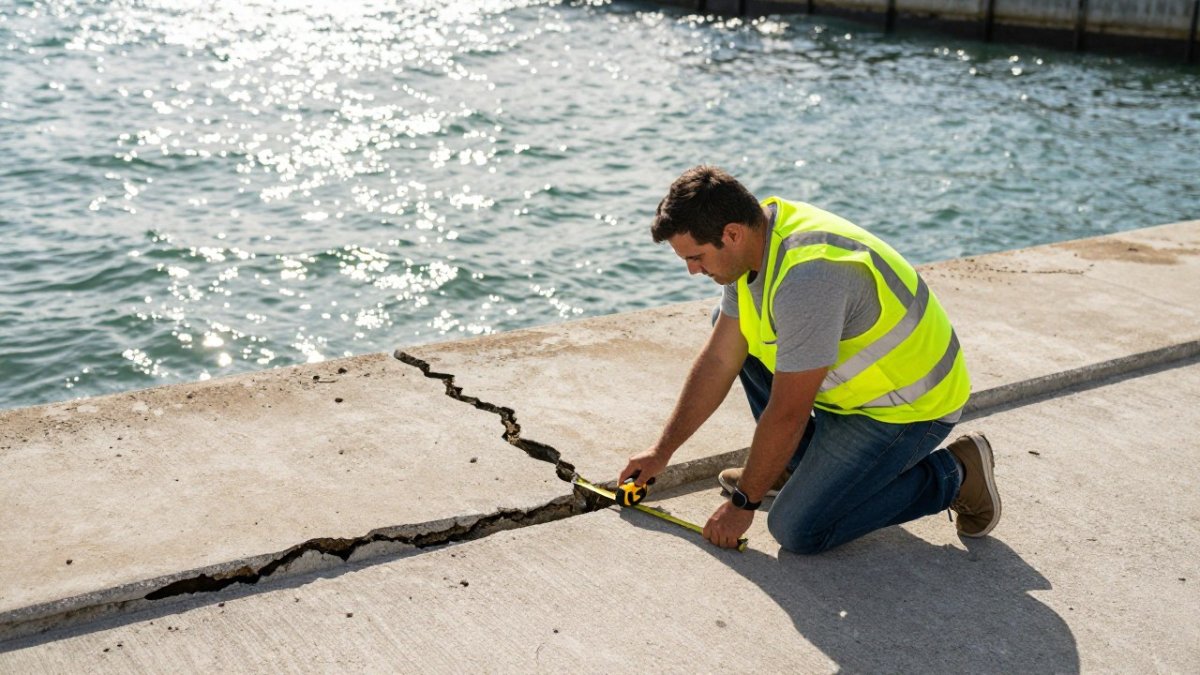
Visible cracks in the cap or panels. Cracks that widen or run through the full panel are not harmless. What to do: Photograph the crack, mark its length, and recheck in 30 days.
-
Leaning or bowing sections. A wall tilting toward the water or bulging outward is under pressure from soil behind it. What to do: Stop using any dock or lift attached to that section and call an engineer.
-
Shifting or separating panels. Gaps between panels or between the wall and an adjoining structure signal movement. What to do: Measure the gap now and again in a month.
-
Soil loss behind the wall. Sinking ground near the top means water is pulling soil through gaps. What to do: Check for sediment on the water side and fill exposed voids only after the cause is fixed.
-
Sinkholes or sunken ground (What is a sinkhole?). Soft spots, depressions, or holes near the wall often mean an underground void. What to do: Keep people and vehicles away and get it assessed right away.
-
Water bubbling up or pooling. Seepage behind the wall or pooling after rain can mean drainage has failed. What to do: Clear weep holes and drains, then have the drainage system inspected.
-
Rust stains and corroded steel. Rust streaks on the cap or exposed rebar mean the steel is breaking down. What to do: Note where the rust is and how far it spreads, then have a professional judge how serious it is.
Watch out: Do not assume a crack is harmless because the wall still stands. Minor movement can grow quickly in a storm.
The table below lists each warning sign alongside the action the article recommends for it.
| Sign | What to do | Timing |
|---|---|---|
| Visible cracks in the cap or panels | Photograph the crack, mark its length, recheck | Recheck in 30 days |
| Leaning or bowing sections | Stop using attached dock or lift, call an engineer | Immediately |
| Shifting or separating panels | Measure the gap | Recheck in a month |
| Soil loss behind the wall | Check for sediment on the water side | Fill voids only after cause is fixed |
| Sinkholes or sunken ground | Keep people and vehicles away, get it assessed | Right away |
| Water bubbling up or pooling | Clear weep holes and drains, inspect drainage | After rain or as found |
| Rust stains and corroded steel | Note location and spread, have a professional judge it | Assess with a professional |
Repair Options, Lifespan, and When Replacement Makes Sense
Not every failing seawall needs replacing. Small cracks and drainage fixes can extend a wall's life for years, while a leaning wall or deep soil loss usually calls for structural repair or full replacement, depending on material, age, and how far damage has spread. If damage is limited to one section and the rest is sound, repair is often the better value; if movement affects the whole wall, replacement is usually safer long-term. Ask for a written estimate that breaks down each option.
Booking a Seawall Inspection in Southwest Florida
If you spotted any of these signs, the next step is a professional assessment. Take Off Construction Management offers engineering assessments with stamped drawings and integrated field execution for complex Southwest Florida construction projects. Contact us to discuss your project.
Frequently Asked Questions
What are the first signs of seawall failure?
The earliest signs are usually visible cracks in the cap or vertical panels, gaps opening between panels, and small amounts of soil washing out from behind the wall. Any of these warrants a closer look. Cracks that widen over time, or that appear alongside leaning or bulging sections, suggest the wall is moving rather than just aging. Note the date and take photos so you can track whether the damage progresses.
How often do seawalls need to be replaced?
A seawall's service life depends on its material, construction quality, exposure to saltwater, and how well drainage is maintained. Replacement is typically considered when structural movement, widespread cracking, or soil loss can no longer be corrected by repair. Because lifespan varies widely by site, the best way to know is a professional assessment that evaluates the wall's current condition rather than its age alone.
When should I call a seawall contractor?
Call a licensed professional as soon as you notice leaning, bulging, expanding cracks, sinkholes, or water pooling behind the wall, since these can signal active failure. Pricing for inspection or repair depends on the scope of work, materials, and site access, so contact Take Off Construction Management directly for a current quote and an engineering assessment before deciding on repairs.